Are Chinese CCTV Cameras Banned in India? The 2026 Reality
Kushal Sanghvi
Updated●July 7, 2026
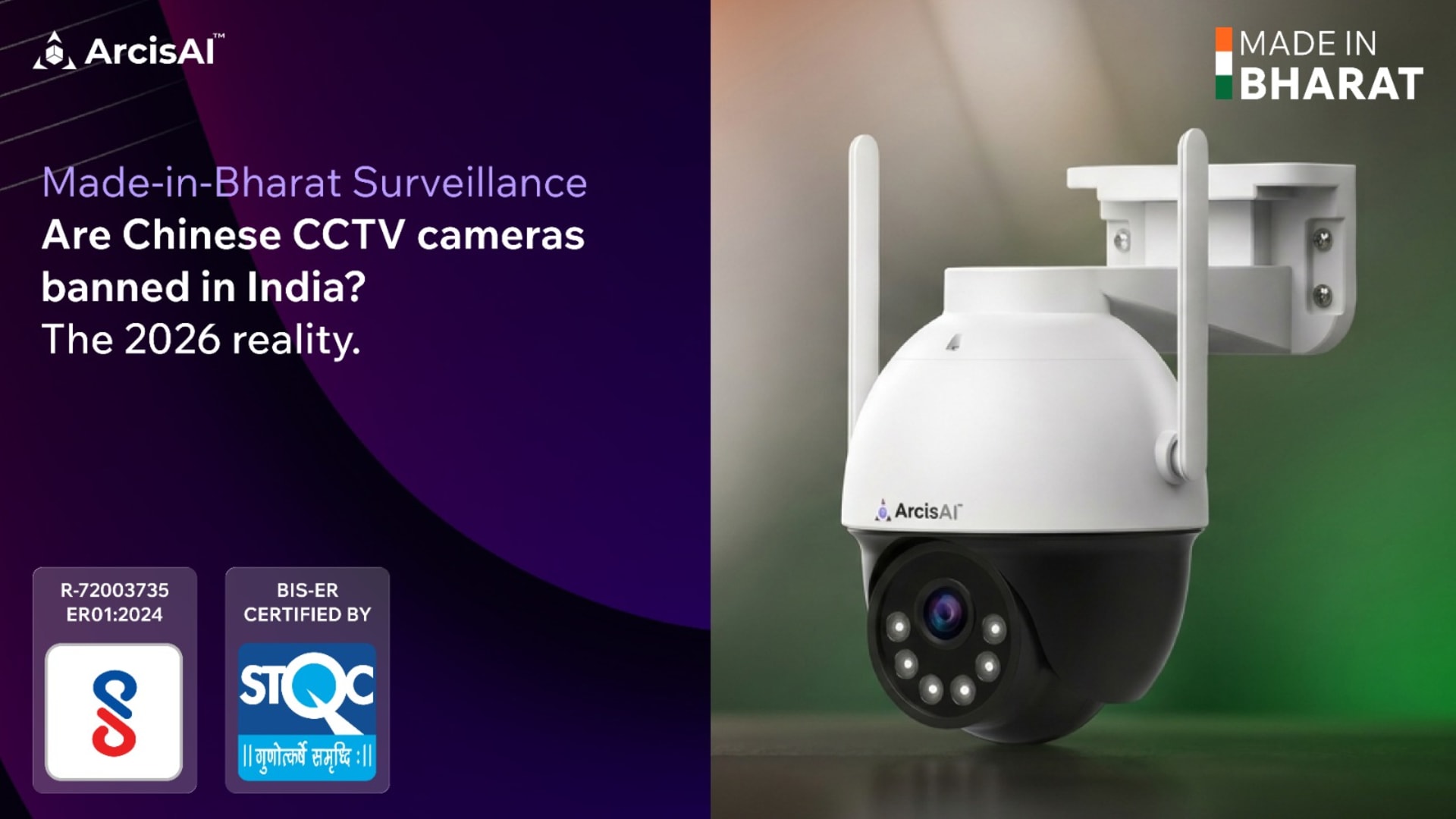
A customer asks for a quote. Somewhere in the conversation comes the line: "You can't buy Chinese cameras any more, they're banned." Then the next vendor says the opposite, that nothing has changed and the same brands are still on the shelf.
So which is it? The truth sits between the two, and the confusion is costing buyers real money. Some are overpaying out of panic. Others are quietly installing cameras that are now illegal to sell, and finding out only when a fault or an audit forces the issue.
Here is the part that gets lost in the noise. India has not banned cameras by nationality. What changed on 1 April 2026 is a certification rule, and the largest Chinese brands have not met it. In practice, that means they can no longer be sold or installed new.
This guide walks through what the rule actually says, whether the cameras you already own are affected, what happens if you get it wrong, and how to choose a replacement with confidence.
What the Rule Actually Says
The change came from the Ministry of Electronics and Information Technology. Through a Gazette notification in April 2024, CCTV cameras were brought under the Compulsory Registration Order, backed by a set of Essential Requirements (ER) focused on cybersecurity. A transition window let older stock sell through, but an Office Memorandum in January 2026 withdrew that relaxation. From 1 April 2026, there are no further extensions.
Under the rule, every internet-connected camera sold, manufactured, or imported in India must be BIS registered and meet the Essential Requirements, verified through STQC testing. Those requirements are about the security of the device itself, including:
- Secure boot and signed firmware, so the camera only runs trusted software
- Protection against tampering and unauthorised access
- Encryption of the video and data the camera handles
- Safe handling of credentials, with no hard-coded or default backdoors
In other words, the rule is about how safe a connected camera is on your network. It is not about the flag printed on the box, and reading it as a simple "Chinese ban" misses the point entirely.
So Are Chinese Cameras Banned, or Not?
Not by name. The rule targets non-compliant cameras, whoever makes them. The difficulty for the major Chinese brands is straightforward: as of mid-2026, their cameras are not certified.
Public records show the STQC certified camera list covers roughly 196 models across only seven brands. Hikvision- and Dahua-branded models do not appear on it. So the questions buyers keep typing — is there a Hikvision ban in India, or is Dahua banned in India — have a practical answer. Cameras that led the market a year ago cannot legally be sold or installed new today.
- The shift has been faster than most people expected:
- Domestic manufacturers moved to non-Chinese chipsets and certified their models ahead of the deadline.
- By early 2026, Indian brands held more than 80% of the market, according to Counterpoint Research, reversing years of foreign dominance.
- Government and enterprise tenders began writing certification into their specifications, closing the door on non-compliant gear.
It is, in effect, a ban for the non-compliant brands. It simply arrives through certification rather than nationality. And the rules themselves grew out of documented concerns about the cybersecurity of connected surveillance devices sitting on sensitive networks.
What It Means for Cameras You Already Own
If you already run Chinese-brand cameras, you do not have to tear them out. The rule applies to new sale, manufacture, and import, not to systems that are already installed and working. Your current setup keeps running as it did.
The pressure builds over time rather than overnight. A sensible way to stay ahead of it:
- Inventory what you have. Note the make, model, and age of each camera, and flag anything already faulty or near end of life.
- Check certification status. Look up each model on the STQC or BIS records, so you know which cameras are compliant and which are not.
- Plan replacements around failures. When a non-compliant camera fails, replace it with a certified model rather than the same unit, because the old one can no longer be bought new.
- Certify anything new from day one. Any expansion, new entrance, or added site should use compliant cameras only, so you are not building fresh non-compliance into the system.
Many buyers are reviewing older cameras anyway, partly for compliance and partly because ageing devices raise genuine security and support questions.
The Penalties for Getting It Wrong
For sellers, dealers, and installers, the stakes are higher than a lost sale. Under the BIS Act, supplying or installing a non-compliant camera after the deadline can carry:
- Fines of up to ten times the value of the product involved
- Imprisonment of up to two years in serious or repeat cases
- The reputational cost of a failed audit or a client dispute
Buyers feel it less directly, but they still feel it. A non-compliant install can mean a forced replacement later, certification is increasingly tied to insurance cover, and it is fast becoming a hard requirement for tenders. Put simply, choosing a compliant camera now is the cheaper decision across the life of the system.
What to Buy Instead
The decision is simpler than the noise around it suggests. Work through four checks in order:
- BIS registration first. Confirm the camera is BIS registered against the Essential Requirements, often written as ER-01. This is the legal minimum for any new camera sold in India.
- STQC for sensitive work. For government, PSU, or critical-infrastructure projects, look for STQC certification on top, since those tenders increasingly demand it.
- Verify, don't trust the brochure. Ask for the BIS or STQC certificate number and check it on the official portal, or run it through a certificate verifier, before you commit.
- Weigh the supply chain. For anyone moving away from high-risk foreign components, a Made-in-India camera built on a non-Chinese supply chain is the cleaner long-term choice, not just a compliant one.
Choosing a Camera That Fits the New Rules
So the question narrows to this: which camera clears every one of those checks without a hidden compromise somewhere else?
- That is the gap the ArcisAI Eco-Series, the value range from Indian manufacturer Adiance Technologies, was built to fill. On the points a serious buyer actually weighs, it lines up cleanly:
- Made in India, with no Chinese components in the build
- BIS-ER certified cameras, backed by an STQC-certified cloud VMS
- NDAA compliant, which matters for export and high-security work
- Available in 3MP, 5MP, and 8MP, with WiFi, PoE, and 4G SIM options to match how your site is already wired
For sites replacing an older Chinese system, the same maker offers a bridge device and a cloud VMS, so there is a migration path that does not force a full rip-and-replace on day one.
When you choose your next camera, check certification first. After 1 April 2026, it is no longer a nice-to-have. It decides whether the camera can be sold and installed at all.