Building a Trusted Surveillance Ecosystem in India
Hardik Sanghvi
Updated●June 5, 2026
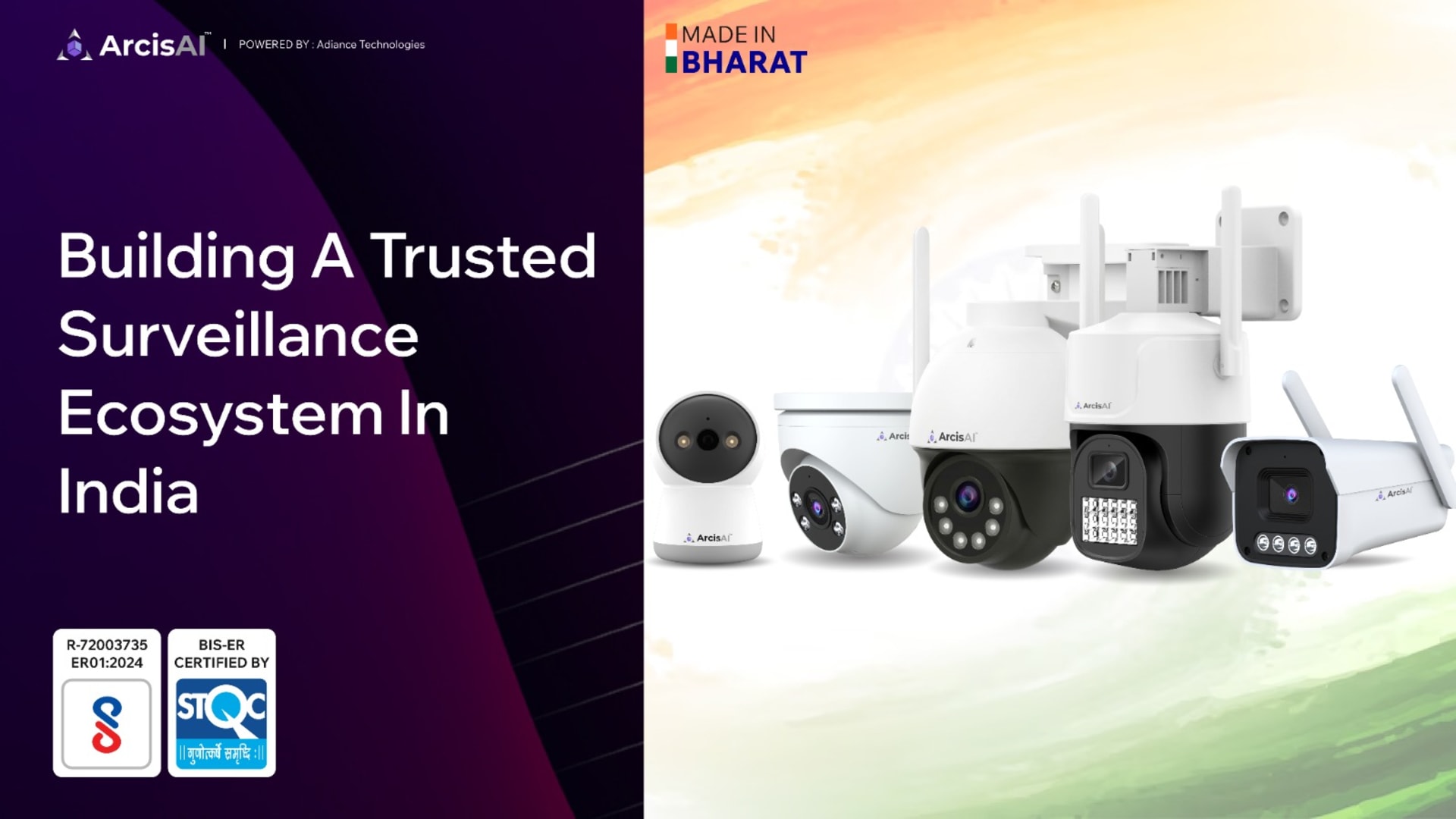
A few years ago, buying surveillance in India was a simple decision: pick the camera with the highest resolution at the lowest price. That era is over. Today, a security buyer in Ahmedabad, Mumbai, or Bengaluru is asking a very different question — not just "How good is this camera?" but "Can I trust the entire system behind it?"
That shift is happening for a reason. A modern surveillance setup is no longer a few cameras and a recorder. It is a connected ecosystem of cameras, NVRs, video management software (VMS), cloud platforms, and AI analytics — all expected to work as one reliable, secure system. When even one layer is uncertified, incompatible, or built on questionable hardware, the whole deployment becomes a liability rather than a safeguard.
This is the foundation of a trusted surveillance ecosystem — and in 2026, in India, it is no longer optional. It is the law.
Table of Contents
The Numbers Behind India's Surveillance Boom
Why "Trusted" Now Officially Means "Certified"
The Hidden Risk: Where Your Hardware Actually Comes From
Certified Camera vs. Certified Ecosystem
The Cost of a Mixed, Non-Certified System
What a Trusted Ecosystem Delivers
How to Evaluate a Trusted Surveillance Partner
Where ArcisAI Fits In
Conclusion
The Numbers Behind India's Surveillance Boom
India is now one of the fastest-growing surveillance markets in the world. According to Mordor Intelligence, the India CCTV market is valued at roughly USD 5.75 billion in 2026 and is forecast to reach USD 14.25 billion by 2031, growing at close to 20% a year. Government projects alone accounted for around 38% of market revenue in 2025, and AI-enabled cameras are the fastest-expanding segment.
Public infrastructure is driving much of this. Under the Smart Cities Mission, roughly 76,000 cameras now feed into integrated command-and-control centres across Indian cities, connecting surveillance directly to traffic, emergency, and civic systems. As deployments grow from a single building to thousands of cameras across multiple sites, the cost of an unreliable or insecure system grows with them.
In short: surveillance in India has moved from a discretionary purchase to strategic infrastructure. And strategic infrastructure has to be trusted.
India is now one of the fastest-growing surveillance markets in the world. According to Mordor Intelligence, the India CCTV market is valued at roughly USD 5.75 billion in 2026 and is forecast to reach USD 14.25 billion by 2031, growing at close to 20% a year. Government projects alone accounted for around 38% of market revenue in 2025, and AI-enabled cameras are the fastest-expanding segment.
Public infrastructure is driving much of this. Under the Smart Cities Mission, roughly 76,000 cameras now feed into integrated command-and-control centres across Indian cities, connecting surveillance directly to traffic, emergency, and civic systems. As deployments grow from a single building to thousands of cameras across multiple sites, the cost of an unreliable or insecure system grows with them.
In short: surveillance in India has moved from a discretionary purchase to strategic infrastructure. And strategic infrastructure has to be trusted.
Why "Trusted" Now Officially Means "Certified"
The biggest change isn't market size — it's regulation. The Ministry of Electronics and Information Technology (MeitY), enforced through the Bureau of Indian Standards (BIS), has made certification mandatory for surveillance hardware sold in India.
- From 9 April 2025: STQC (Standardization Testing and Quality Certification) became mandatory for CCTV products, validating cybersecurity, secure firmware, and data handling.
- From 1 April 2026: the earlier relaxation ended. CCTV cameras that do not conform to the notified Essential Requirements (ER) under BIS, including ER-01, can no longer be legally sold, supplied, or installed in India.
The mandate covers all network-connected cameras — IP, PoE, Wi-Fi, NVR-based, and cloud-connected systems. For buyers, this means a simple but powerful rule of thumb: if a camera doesn't carry a valid BIS Registration and STQC certification, it shouldn't be in your project — and may not be legal to install.
The Hidden Risk: Where Your Hardware Actually Comes From
Certification exists because of a real, documented problem. India's surveillance estate has long depended on imported hardware. Counterpoint Research has estimated that around 80% of CCTV components used in India originated from China, and as far back as 2021, the government told Parliament that roughly one million cameras in government institutions were of Chinese origin, with concerns about video data being routed to servers abroad.
This is not unique to India. Under the US National Defense Authorization Act (NDAA), major Chinese surveillance makers were placed on a restricted entity list over national-security concerns. India's own policy now pushes procurement toward "trusted locations" — manufacturers where the entire production chain is visible and free of hidden backdoors.
For a buyer, the lesson is straightforward: a camera can pass every spec-sheet test and still be a security risk if you can't trust where — and how — it was built.
Certified Camera vs. Certified Ecosystem
Here's the distinction that matters most. A certified camera tells you one device meets a standard. A certified ecosystem tells you the whole system is reliable. A trusted ecosystem rests on two layers working together:
- Certified components. Each part — cameras, recorders, software — meets a recognised standard, such as BIS/ER certified cameras and STQC-certified VMS. This is now a baseline requirement for government and enterprise projects.
- An interoperable, tested platform. Certified parts must also communicate cleanly with one another. A genuine ecosystem is tested end to end, so compatibility and performance hold up in real deployments — not just on a datasheet.
Put simply: certification proves each part is reliable. The ecosystem proves they are reliable together.
The Cost of a Mixed, Non-Certified System
When a system is stitched together from unrelated, uncertified products, problems accumulate over time:
- Compatibility failures between cameras, recorders, and software from different brands
- Video lag, dropped frames, and recording interruptions
- Poor synchronisation across devices and platforms
- Higher and more frequent maintenance
- Limited scalability when the system needs to grow across sites
- Wider exposure to cybersecurity threats and data leakage
On a single-site deployment these are annoyances. Across a multi-site, government, or enterprise rollout, they become expensive failures — and in a security system, every failure is a real risk.
What a Trusted Ecosystem Delivers
A certified, interoperable ecosystem delivers stable and predictable performance:
- Consistent compatibility across all connected devices
- Continuous monitoring with reduced downtime
- Centralised control through one VMS and a single mobile app
- Easy scaling from a single site to thousands of cameras
- Lower maintenance and fewer technical errors
- Stronger cybersecurity and clearer compliance for tenders
Better long-term reliability and return on investment
How to Evaluate a Trusted Surveillance Partner
Before you specify, integrate, or expand a surveillance system in 2026, ask the vendor these questions:
- Is it certified? Look for valid BIS Registration, STQC certification, and ER compliance — documented, not just claimed.
- Where is the hardware made? Is it Make-in-India, and does it run on a non-Chinese SoC for genuine supply-chain trust?
- Does it work as one system? Are the cameras, NVRs, and VMS tested together, with ONVIF support for open integration?
- Can it scale and modernise? Can it grow across sites and add new technology without replacing what you already own?
- Is it compliant for serious deployments? Does it meet the standards demanded by government, PSU, BFSI, smart-city, and critical-infrastructure buyers?
Where ArcisAI Fits In
ArcisAI, powered by Adiance Technologies (Ahmedabad), is built around exactly this principle — that trust comes from the complete system, not a single product.
At the centre of the lineup are the Eco Series cameras: surveillance hardware refined through years of engineering and field testing, built under a Make-in-India approach and running on carefully selected non-Chinese SoC platforms. Around them sits a complete, certified ecosystem:
- NVRs from 4CH to 32CH for stable, high-resolution recording
- ArcisAI Cloud VMS — STQC certified and able to scale past 10,000 cameras across sites
- ArcisAI Mobile App for monitoring from anywhere
- Arcis Bridge Device (ABD) to bring existing ONVIF cameras into the platform without replacement
- ArcisGPT, which lets operators search footage in plain language
ArcisAI also meets the standards that decide serious deployments: BIS/ER certified cameras, STQC-certified VMS, NDAA compliance, GDPR alignment, and a transparent, India-engineered supply chain. In other words, it is not just a certified camera — it is a certified ecosystem, ready for the 2026 mandate on day one.
Conclusion
A certified camera is a good start. A trusted surveillance ecosystem — where every component is certified, interoperable, secure, and built on a supply chain you can verify — is what keeps modern surveillance reliable at scale. In India, after April 2026, it is also what keeps you compliant.
That is the foundation ArcisAI is built on, with its Eco Series cameras at the core: one intelligent, compliant, and reliable system, engineered in India to work as a whole.
Frequently Asked Questions
Table of Contents
The Numbers Behind India's Surveillance Boom
Why "Trusted" Now Officially Means "Certified"
The Hidden Risk: Where Your Hardware Actually Comes From
Certified Camera vs. Certified Ecosystem
The Cost of a Mixed, Non-Certified System
What a Trusted Ecosystem Delivers
How to Evaluate a Trusted Surveillance Partner
Where ArcisAI Fits In
Conclusion
Send Us a Message